Thesis / 2026
FeltSpace
A personalized ambient system that enables remote partners to share emotions across distance. Each person can express an emotion from their own space, while both environments respond simultaneously to create a sense of shared presence and emotional connection.
Role
Research
Interaction Design
3D Fabrication
Hardware Prototyping
User Testing
Advisor
Haeyoung Kim
tools
Photon 2
Sensors
Fusion 360
3D Printer
JavaScript
Figma

concept
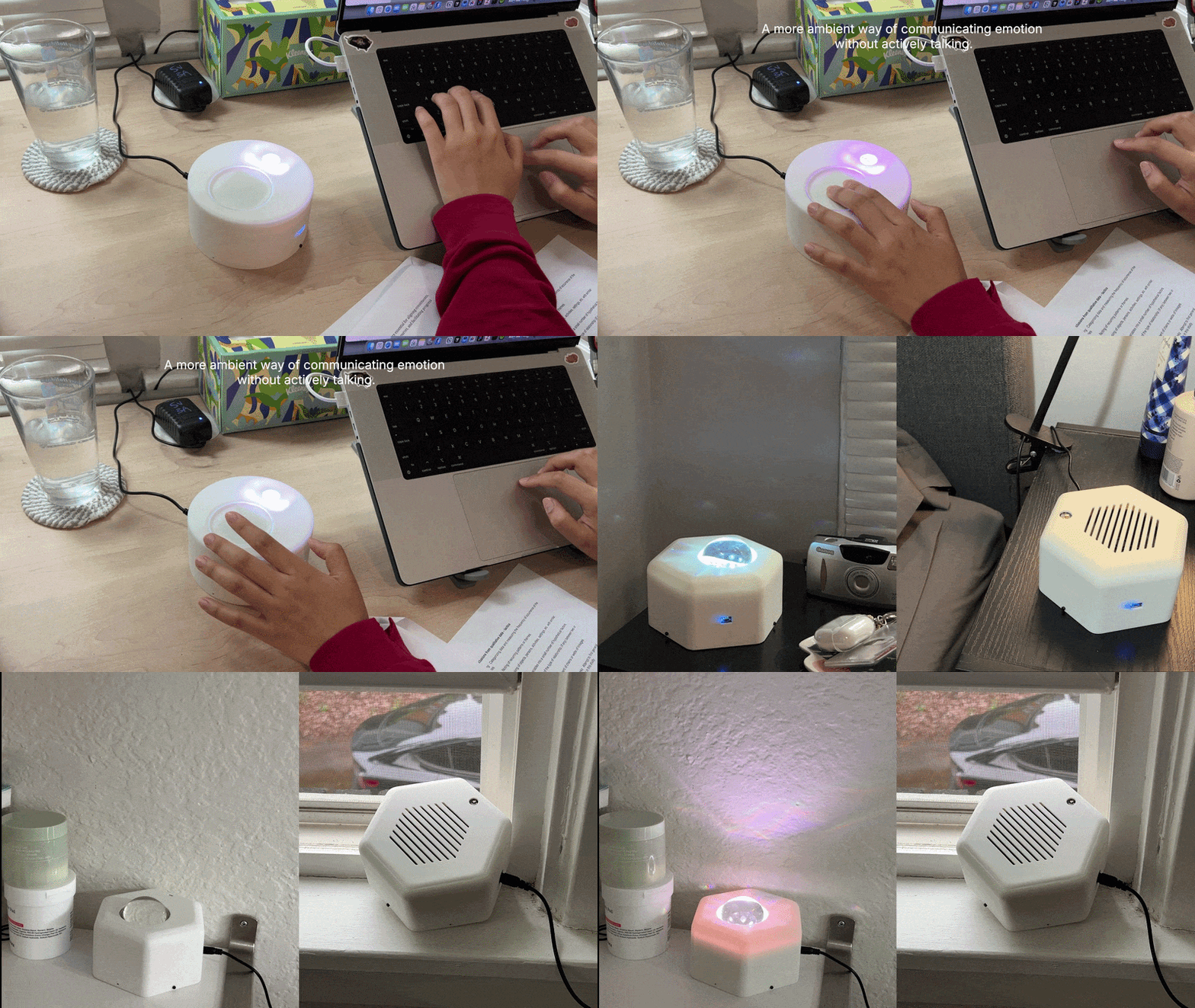
Sending and receiving shared emotional signals
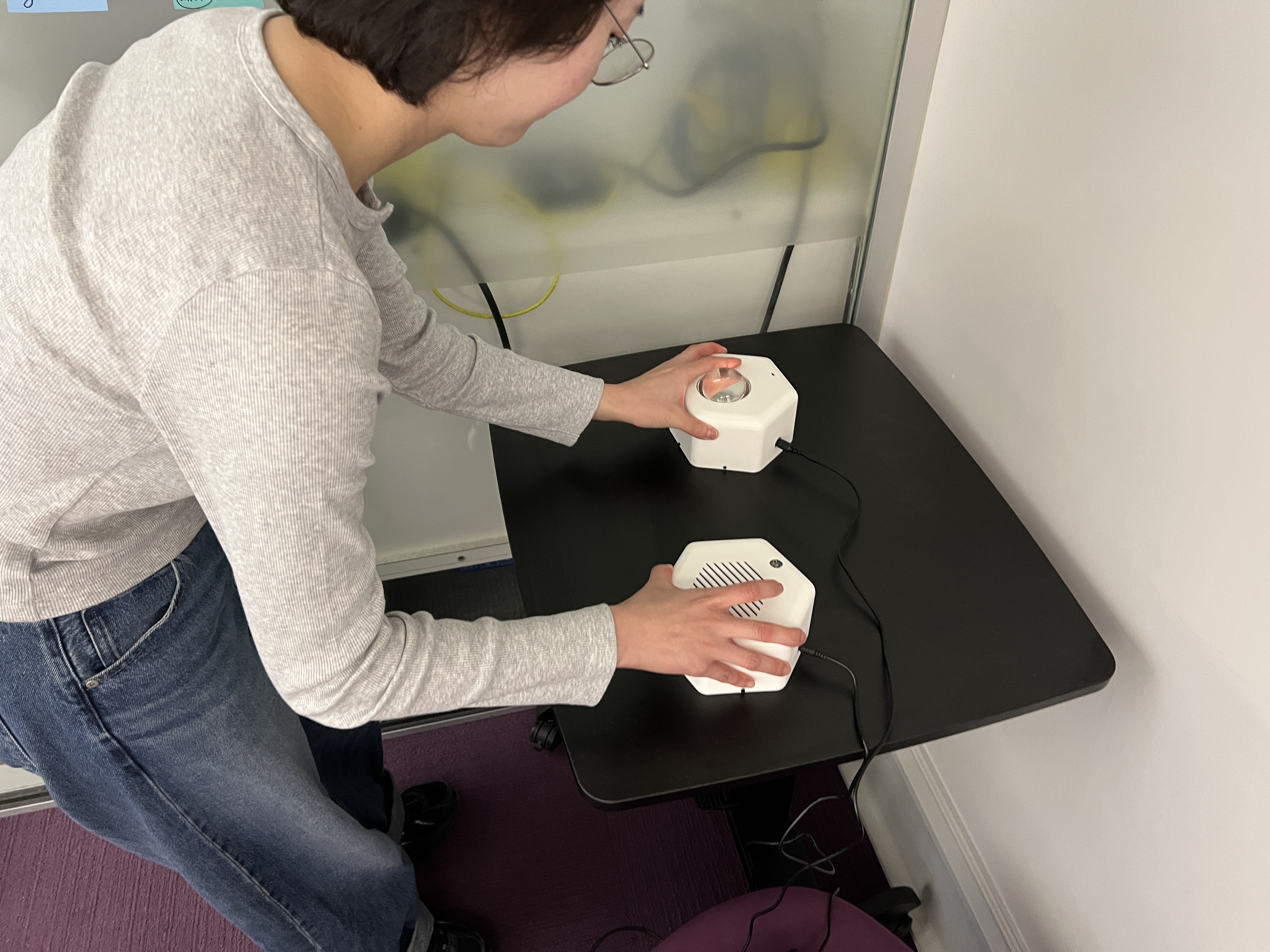
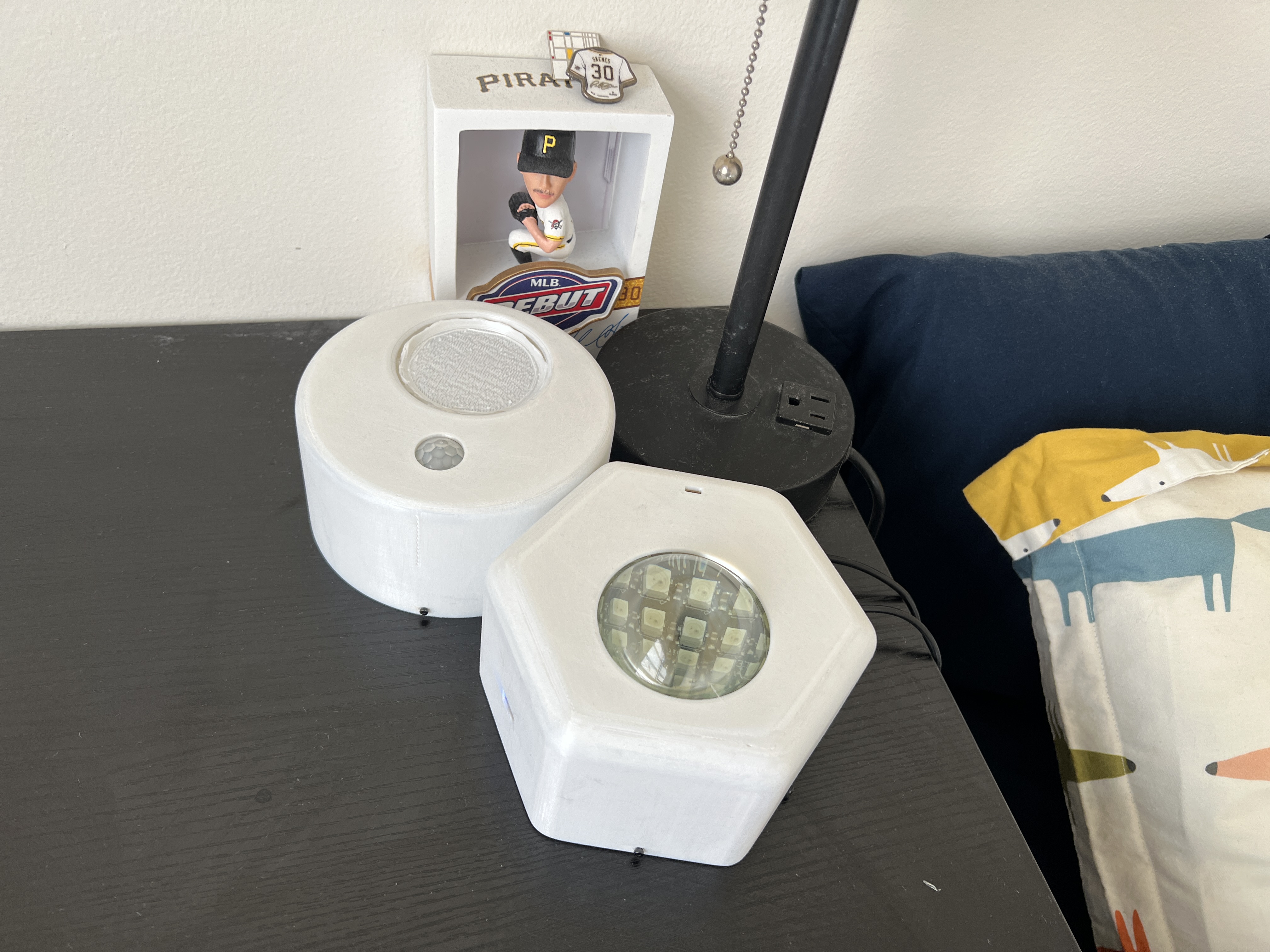
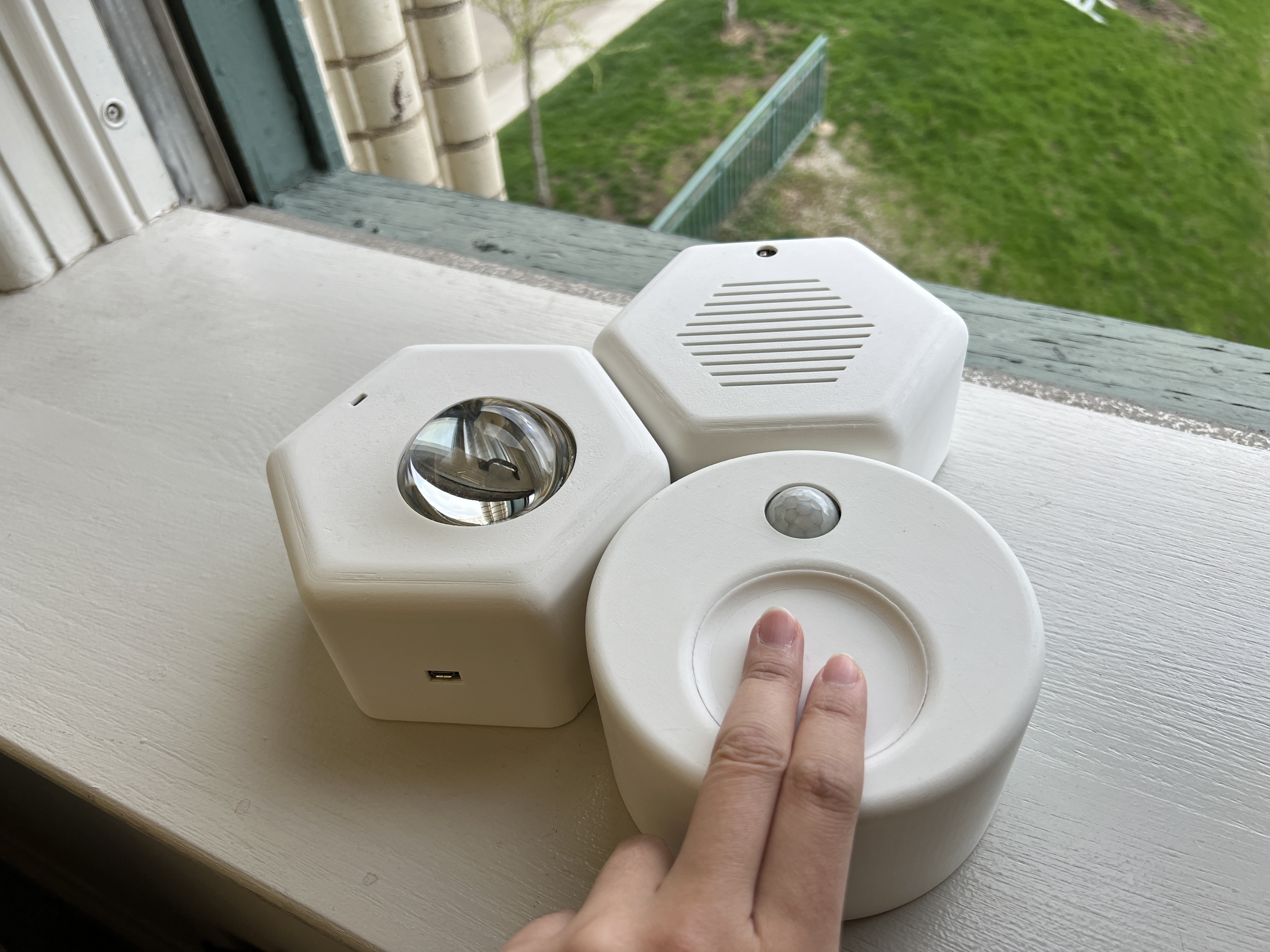
A press-and-hold gesture lets users browse through a set of personalized emotion colors before releasing to send one. When an emotion is shared, both spaces respond with coordinated light and sound, turning an individual feeling into a shared ambient moment.
Personalized device and emotion setup
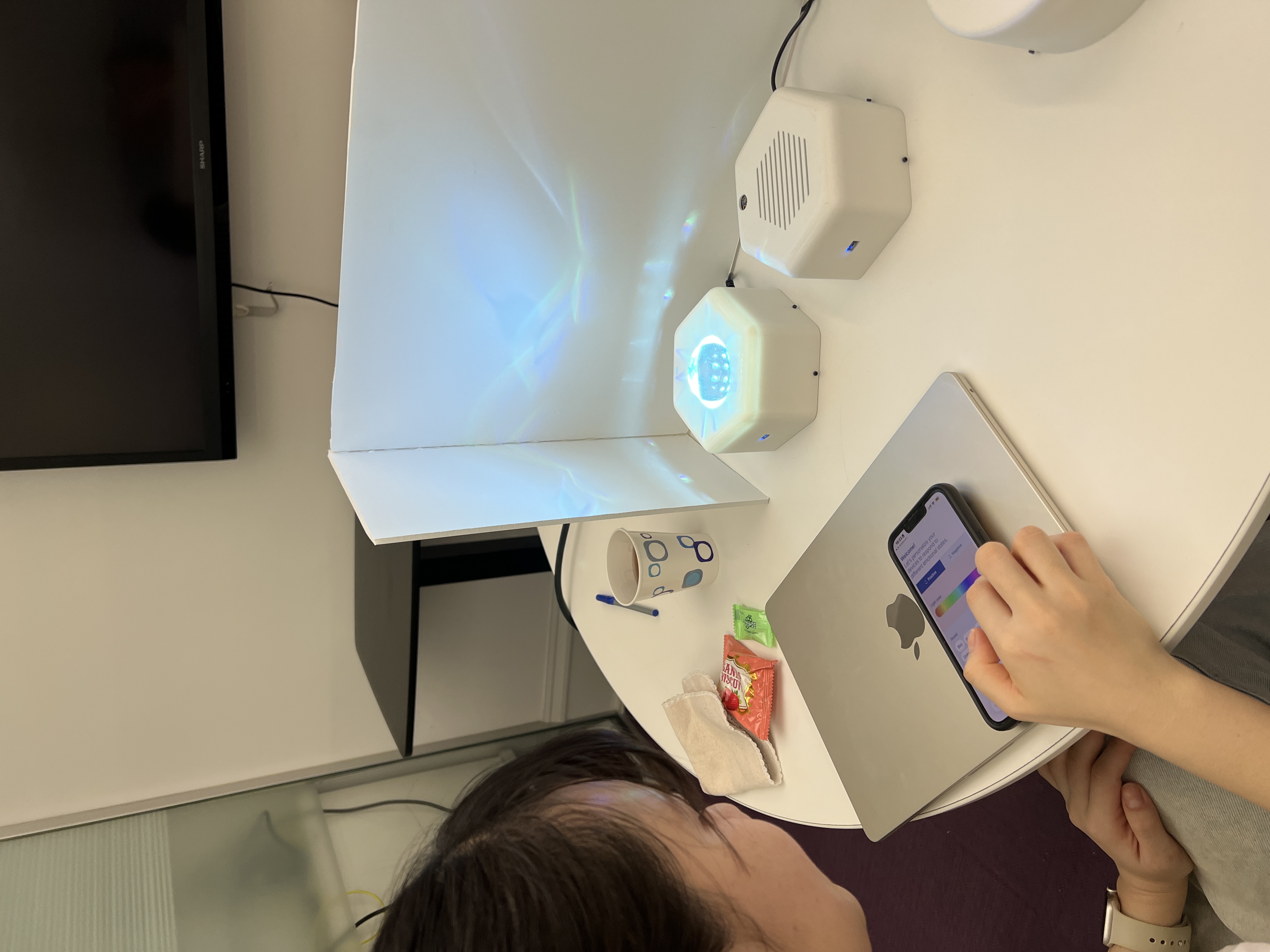
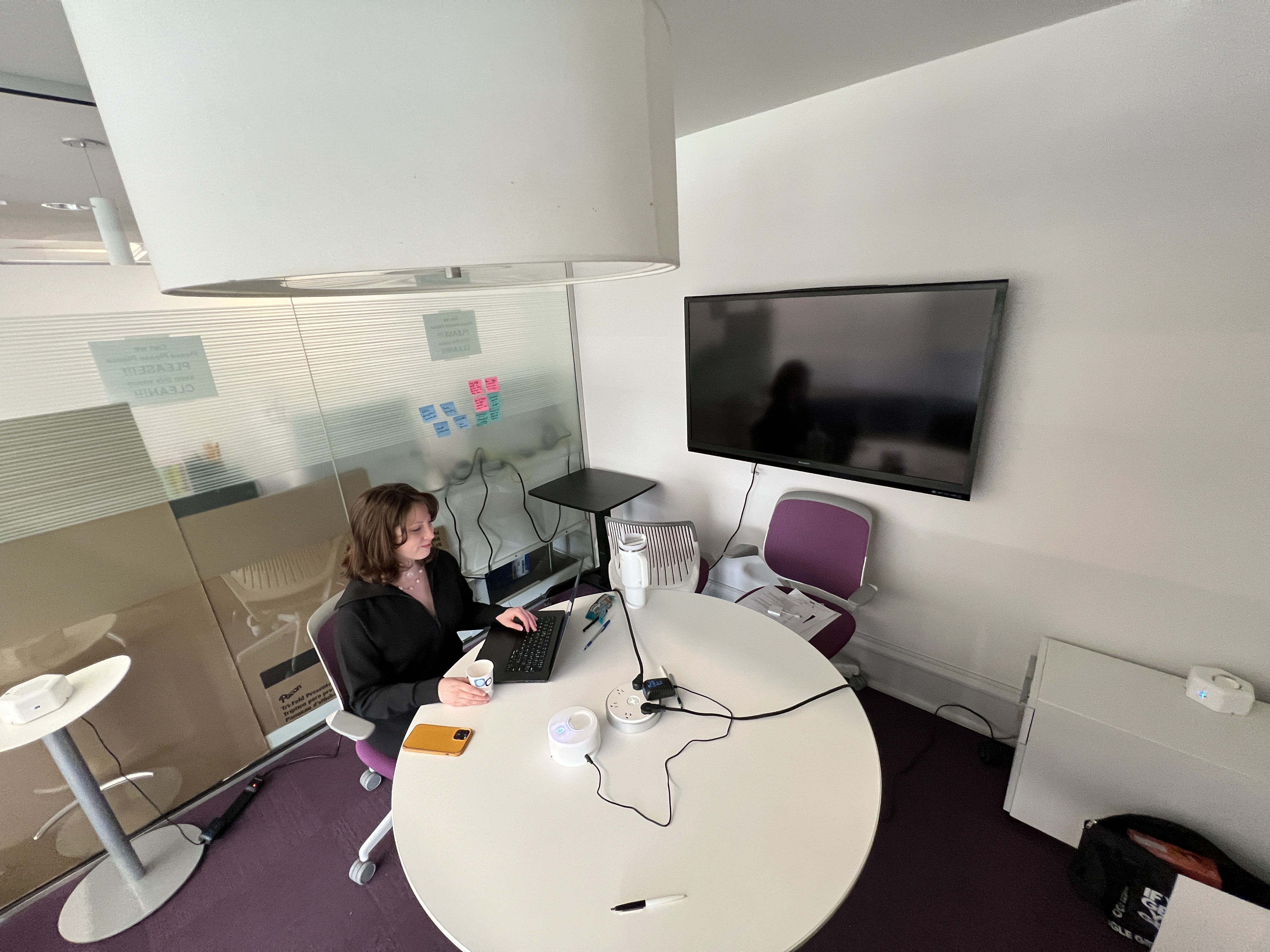
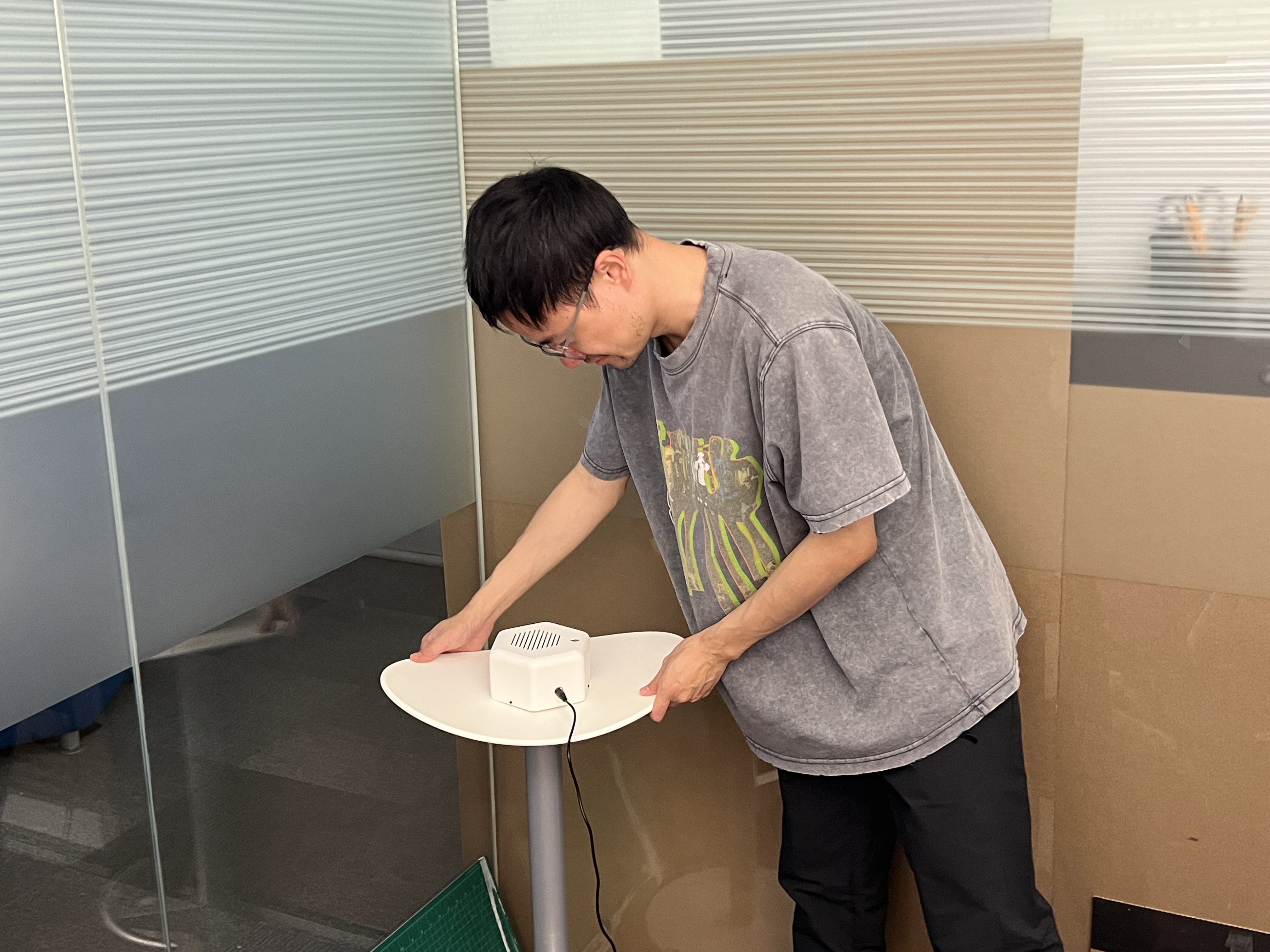
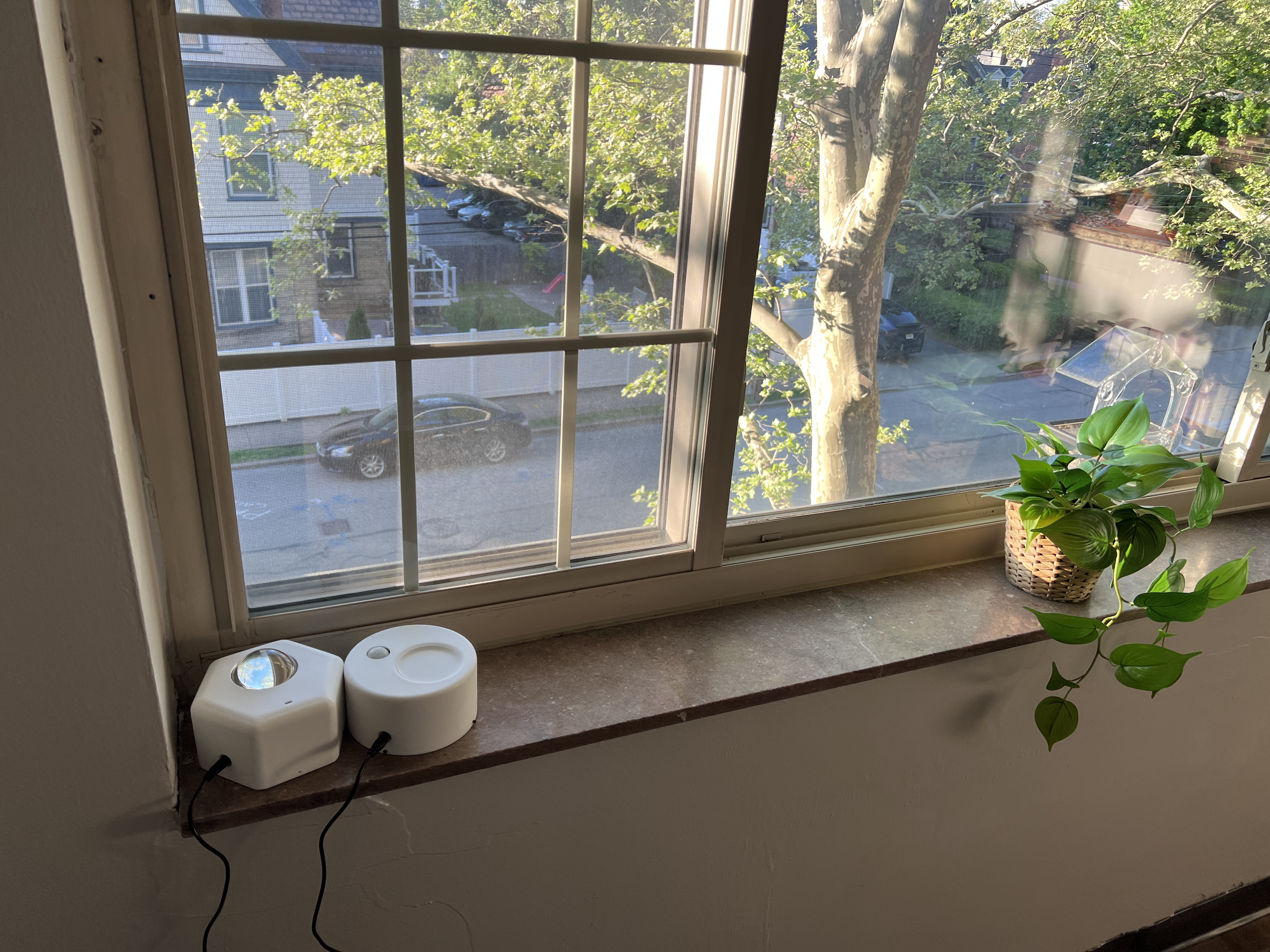
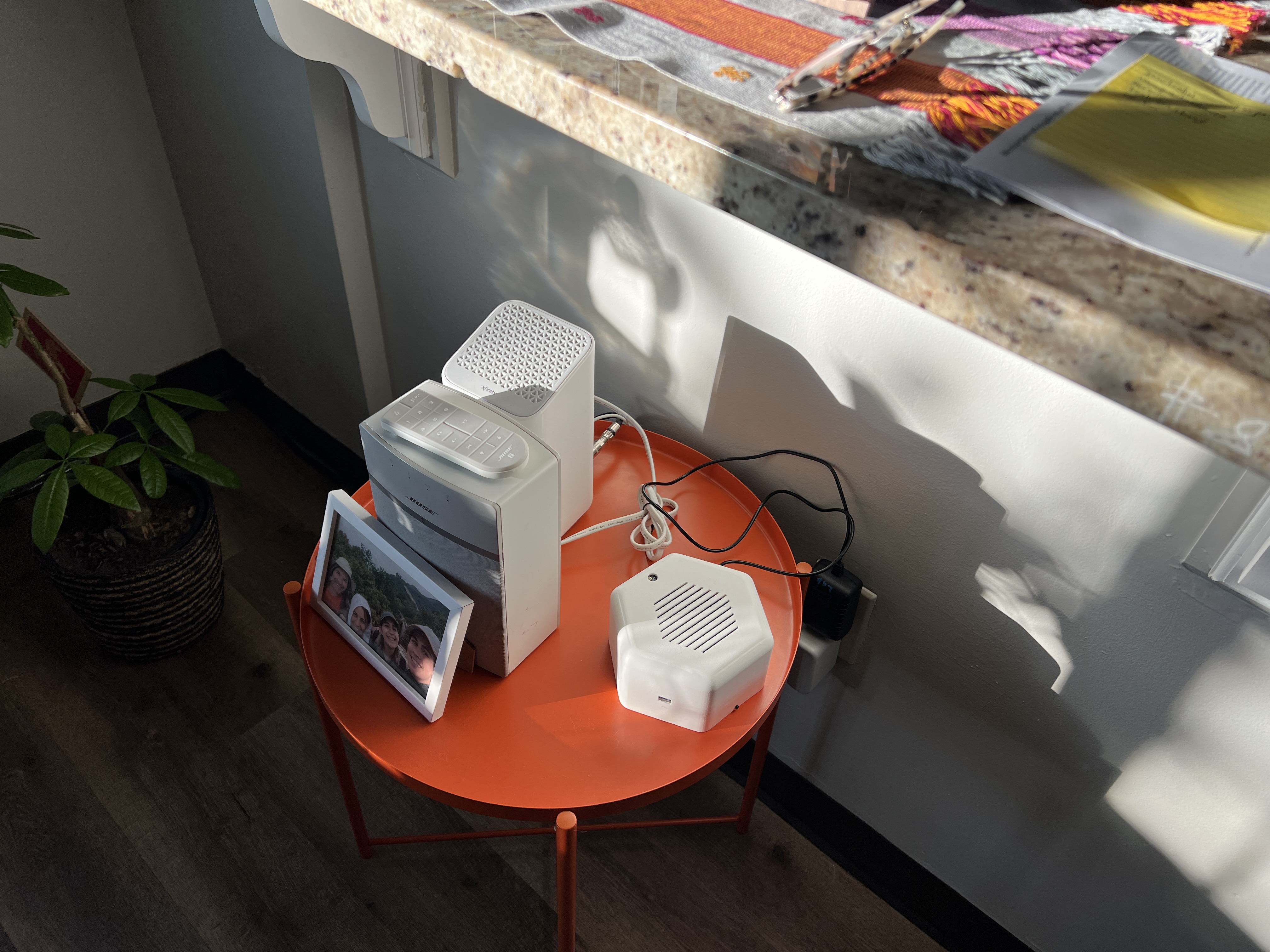
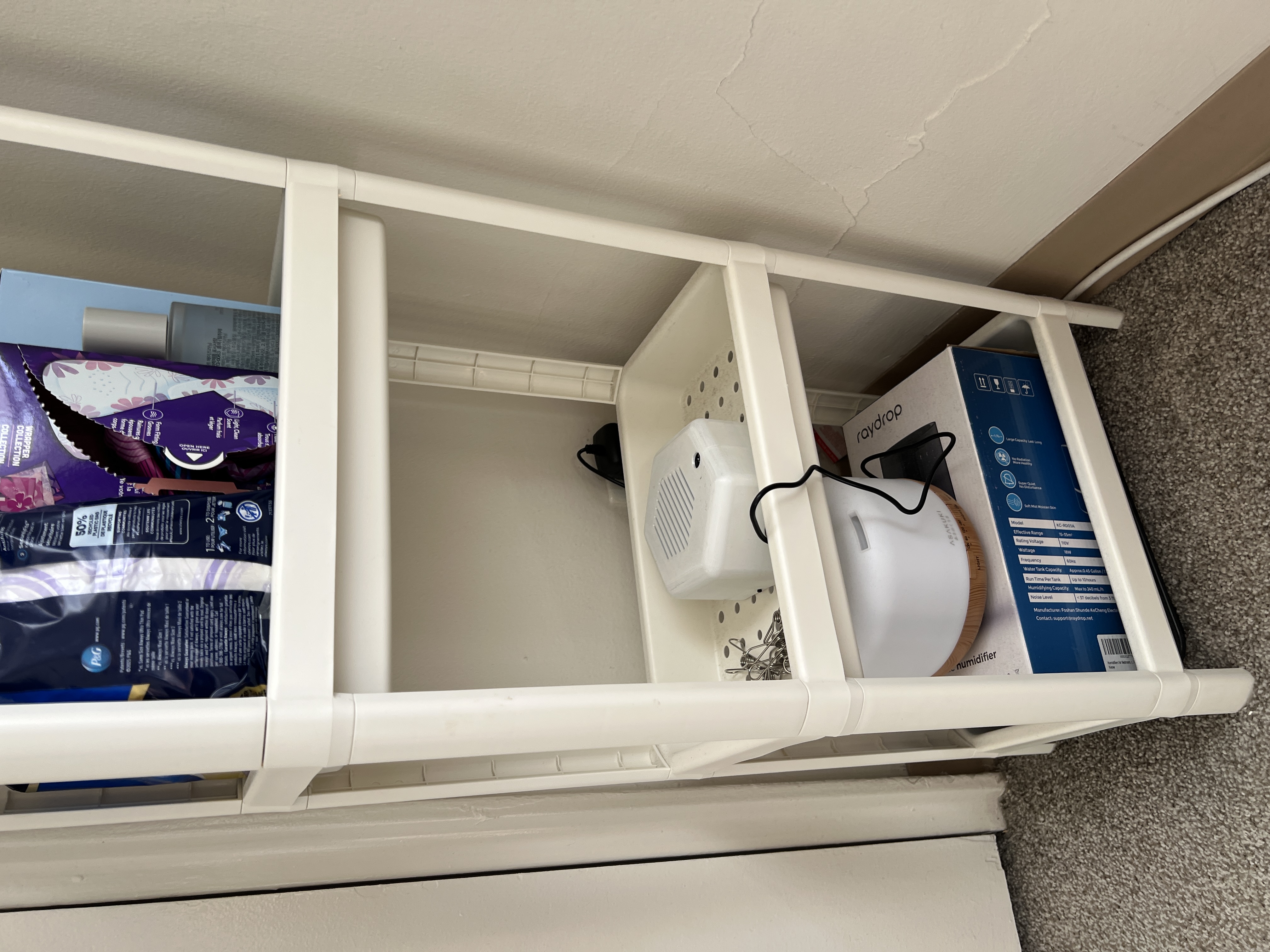
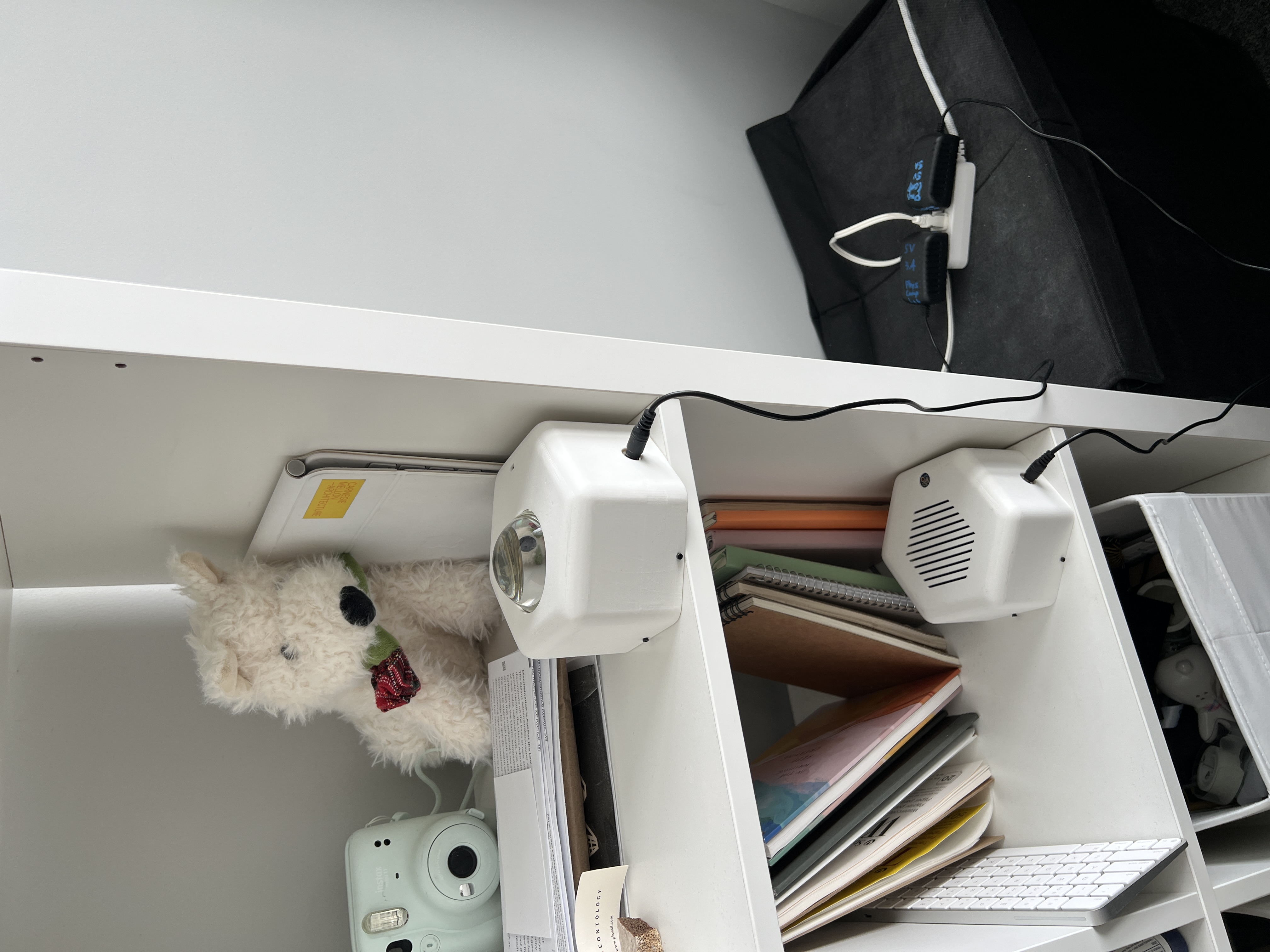
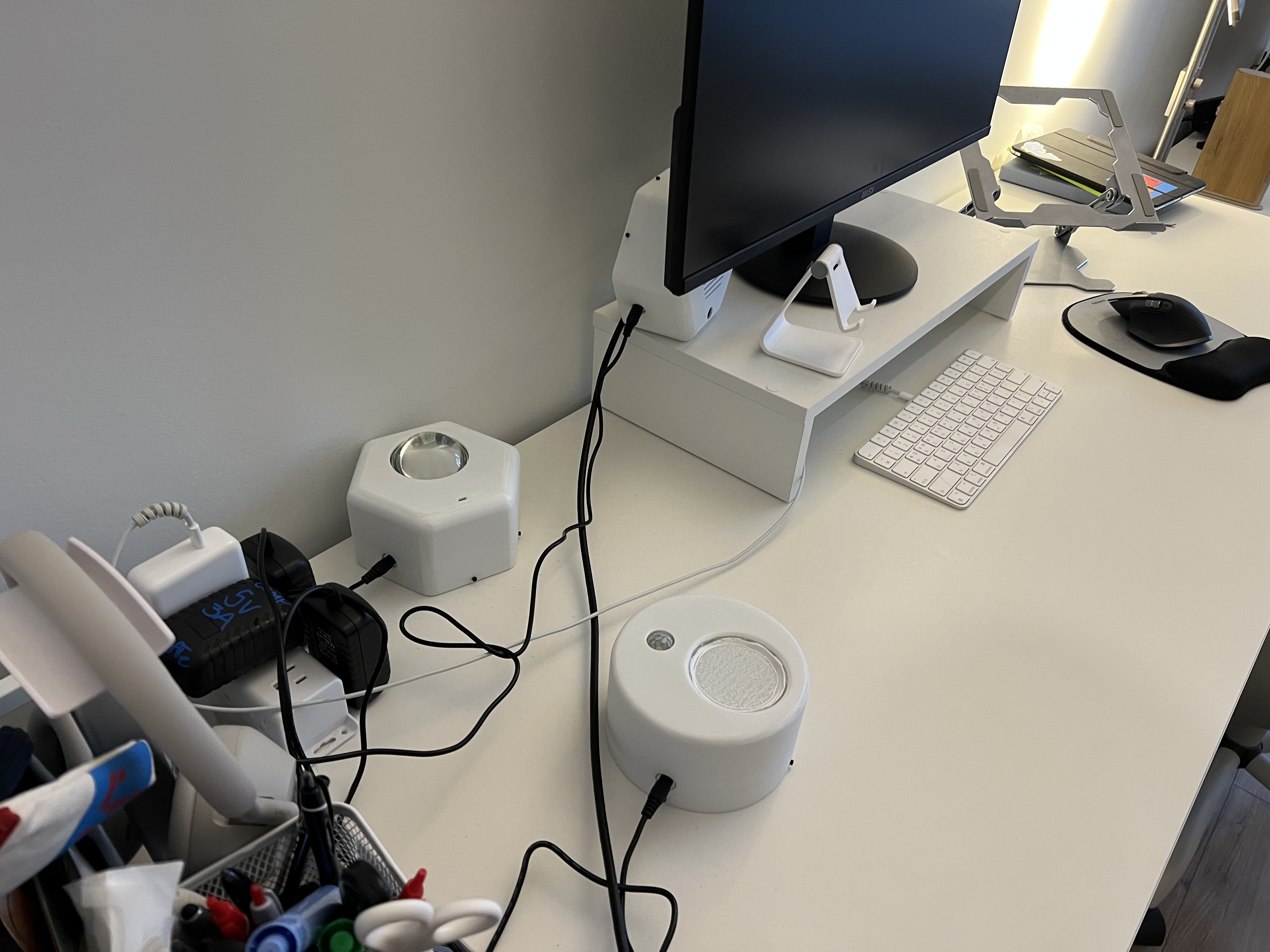
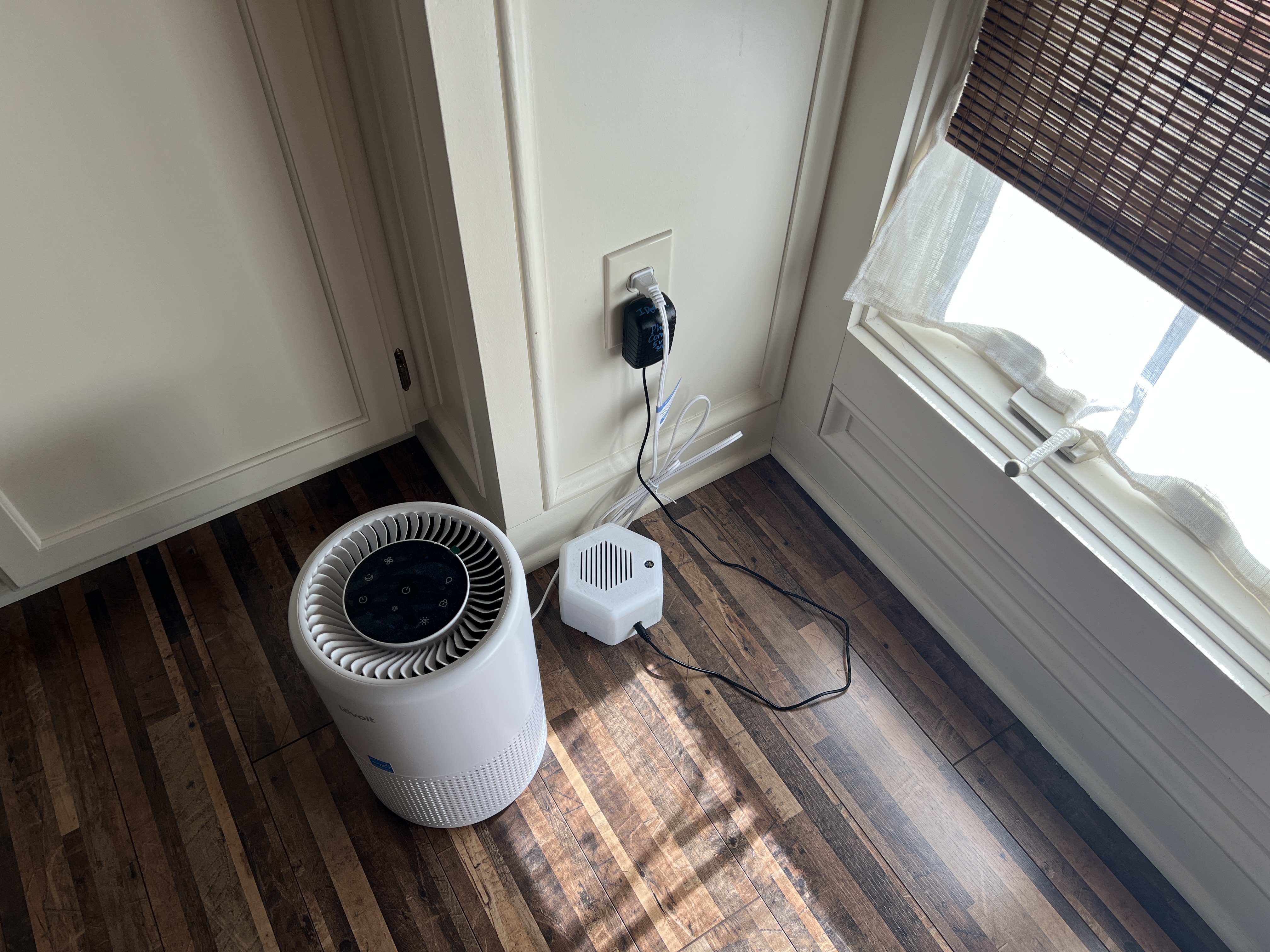
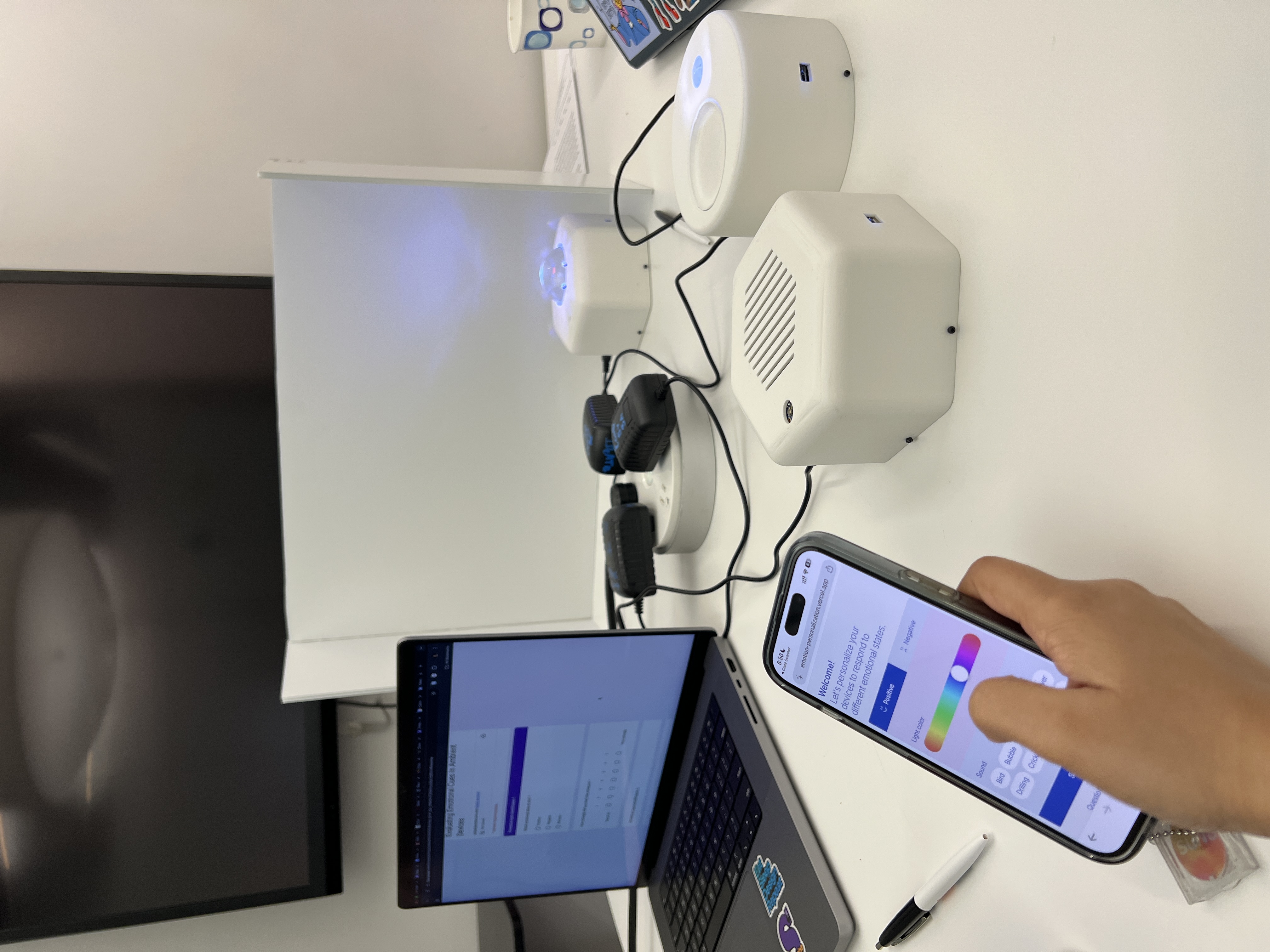
Each device can be freely placed within the space and personalized through a simple QR-based setup. Users assign their own light and sound combinations to different emotions, shaping the system around their own emotional language.
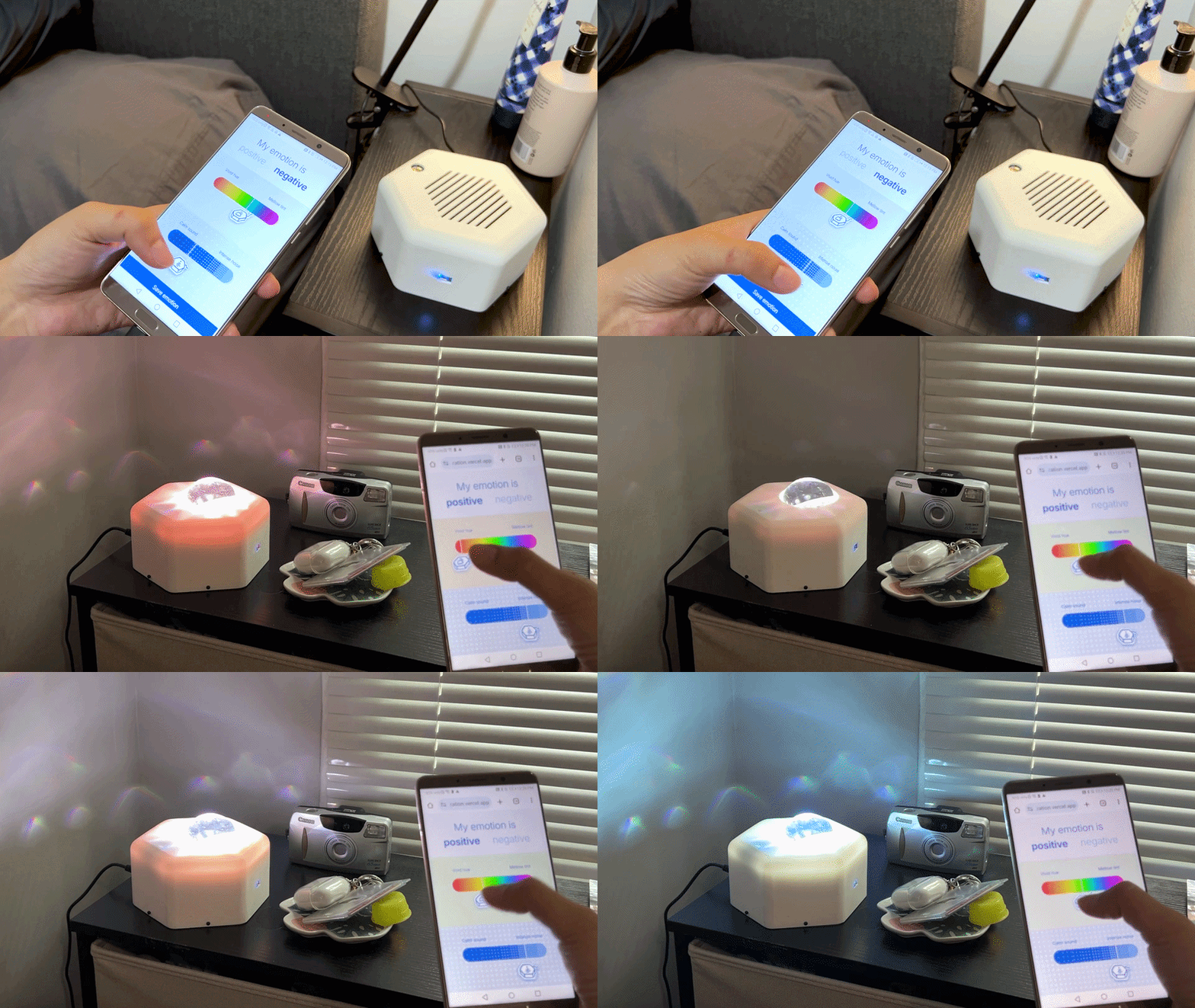
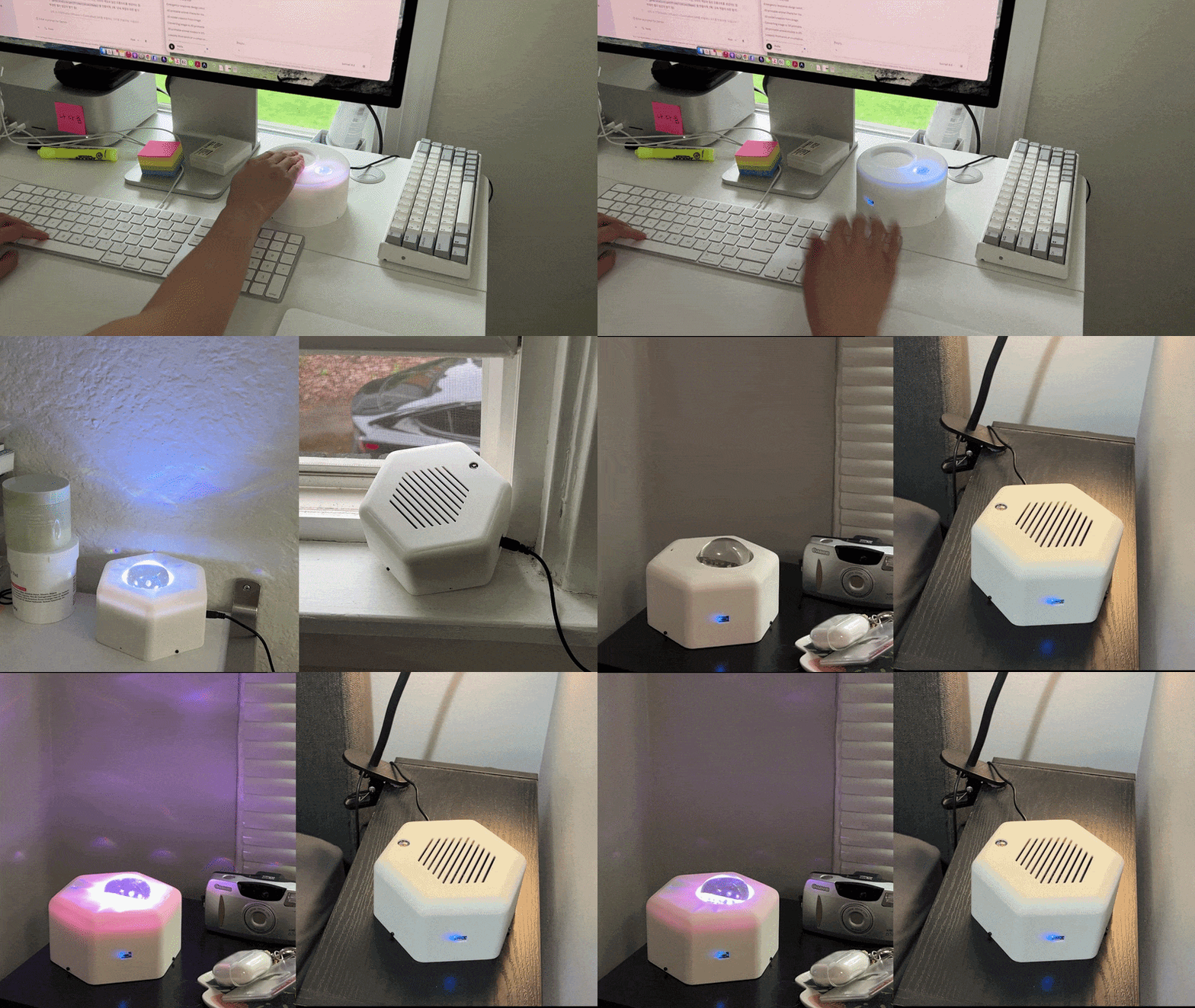
Detecting shared co-presence across spaces
The main control quietly monitors whether both users are present in their spaces. Once co-presence is detected, a small indicator light appears, signaling that emotional exchange can begin.
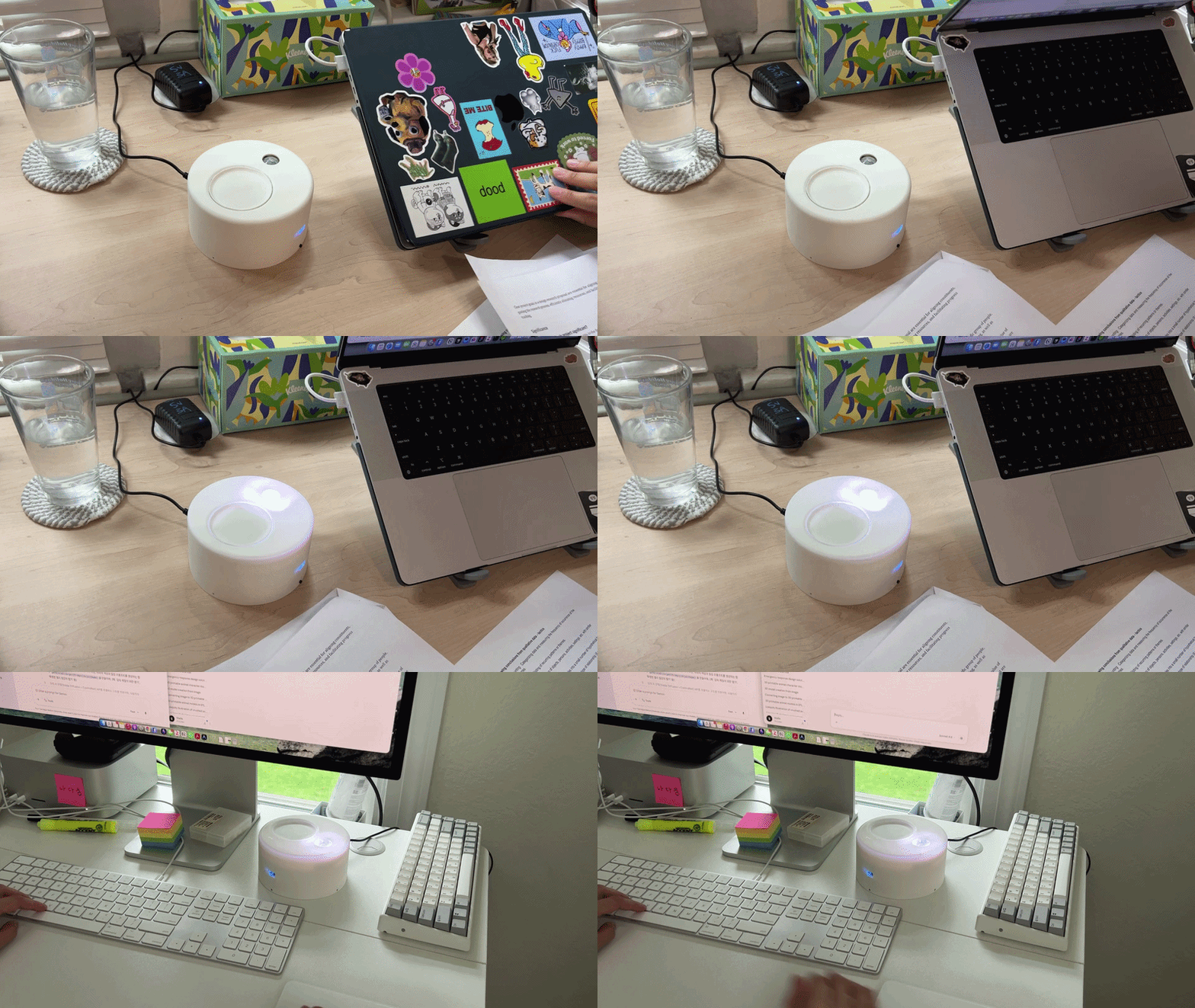
How FeltSpace Works
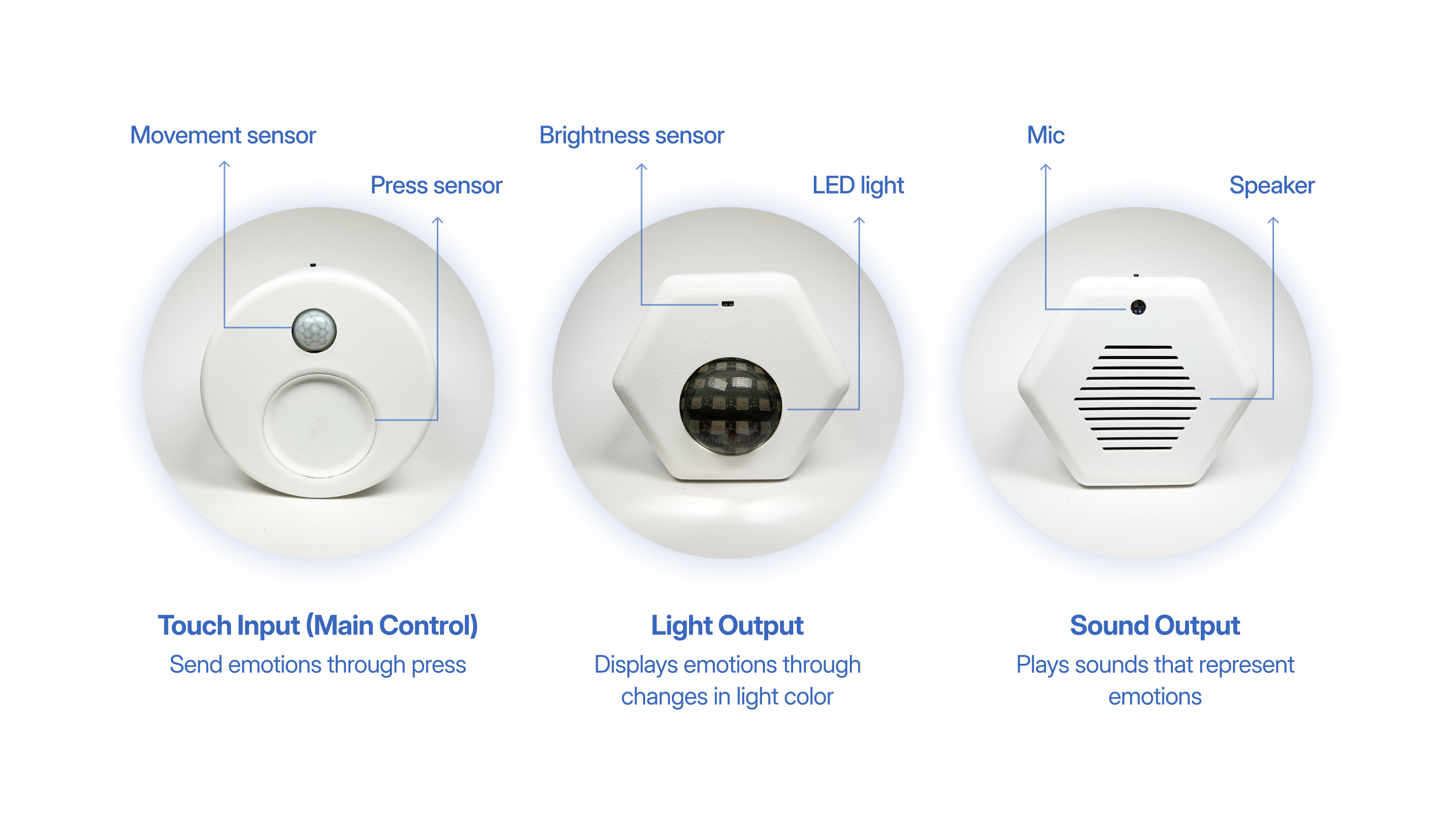
Multi-device system for shared ambient communication
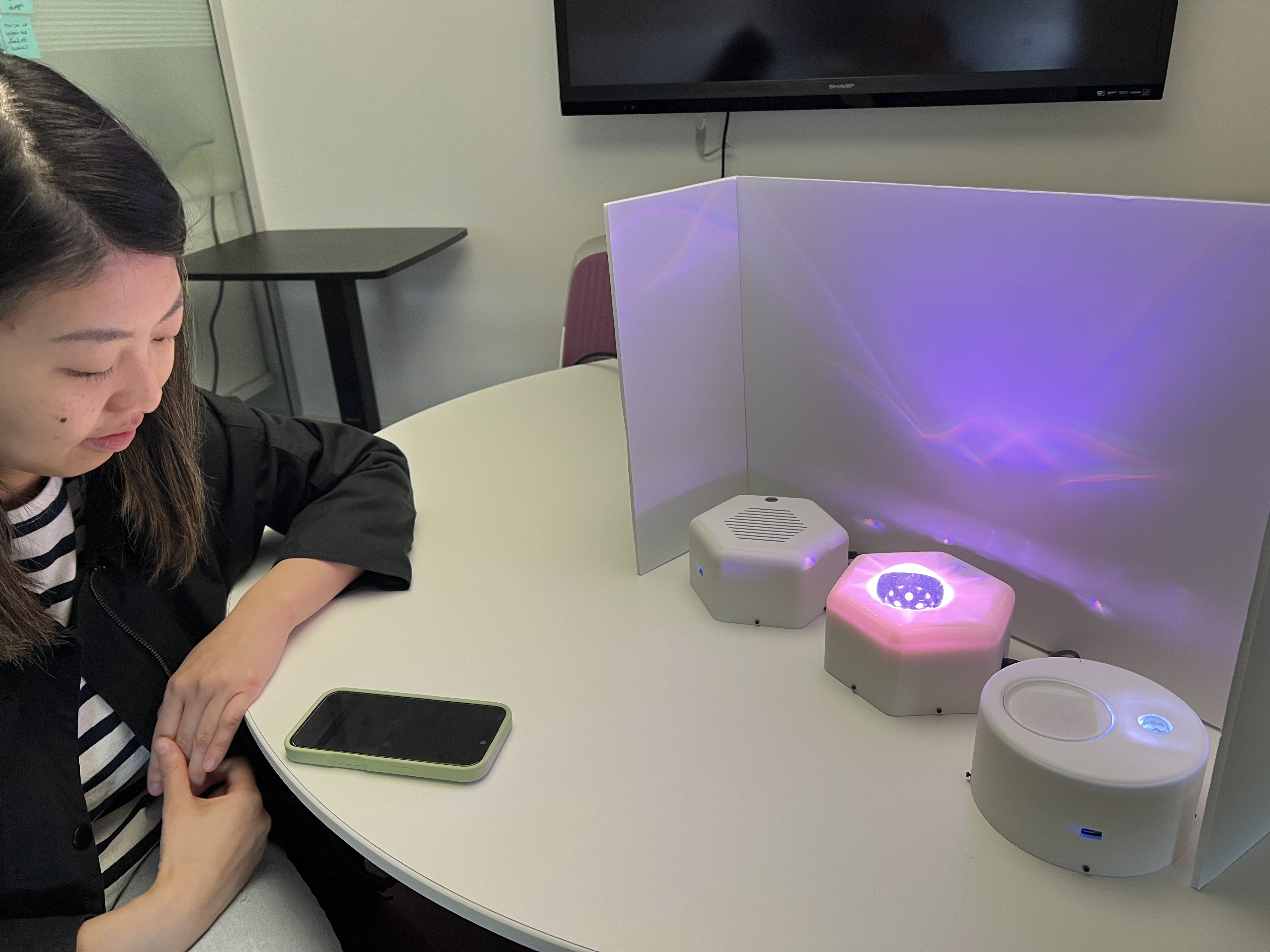
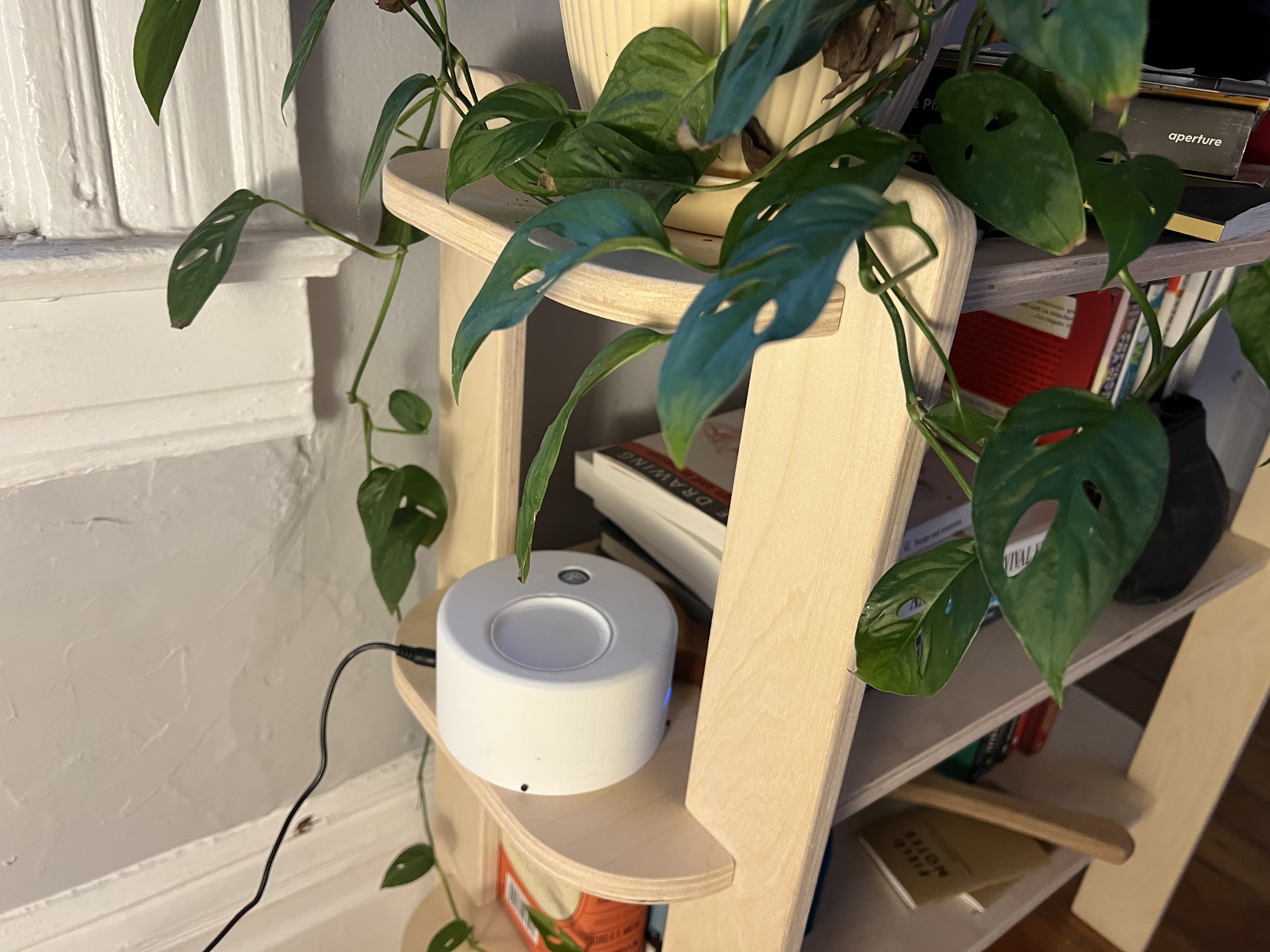
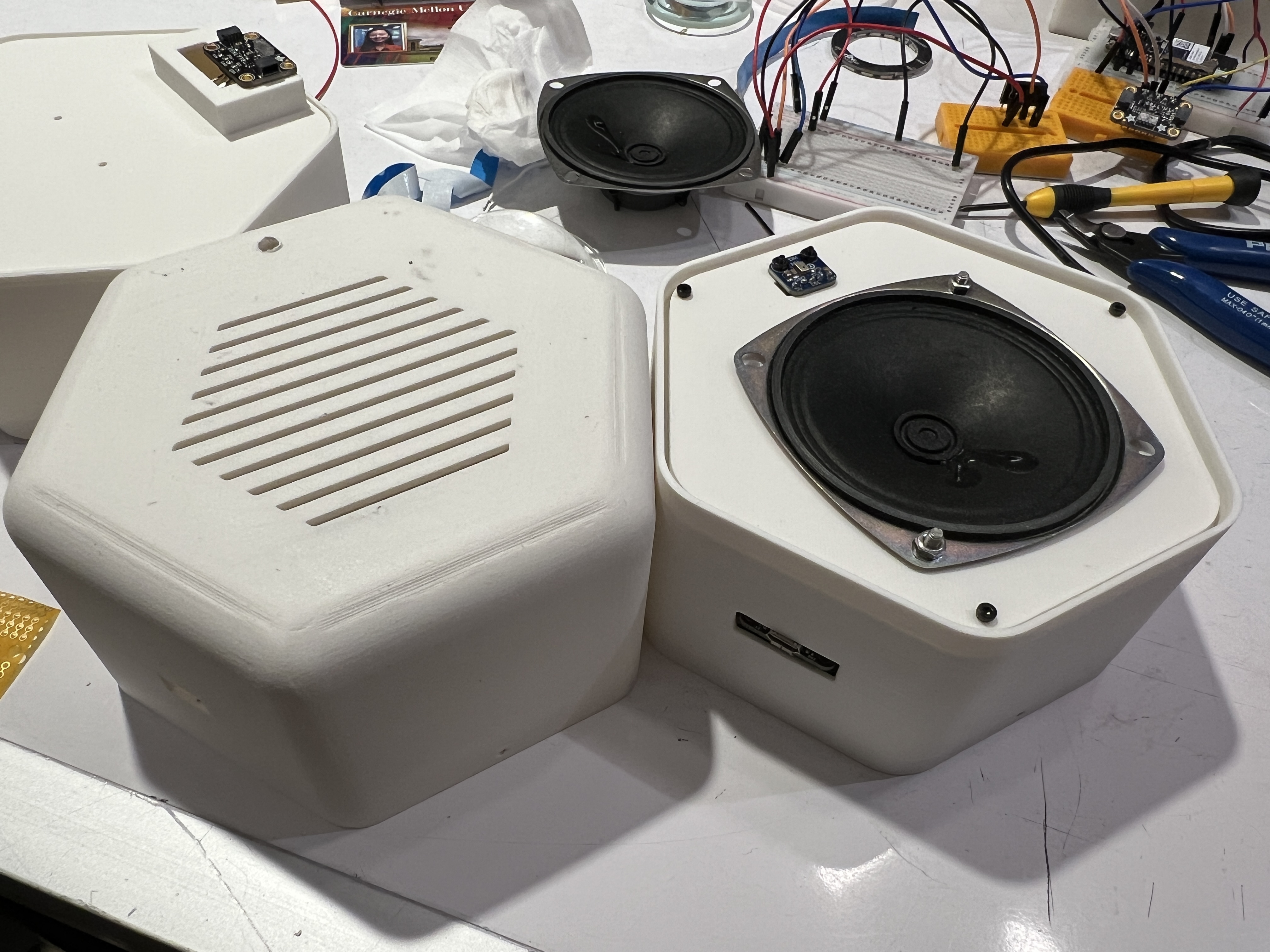
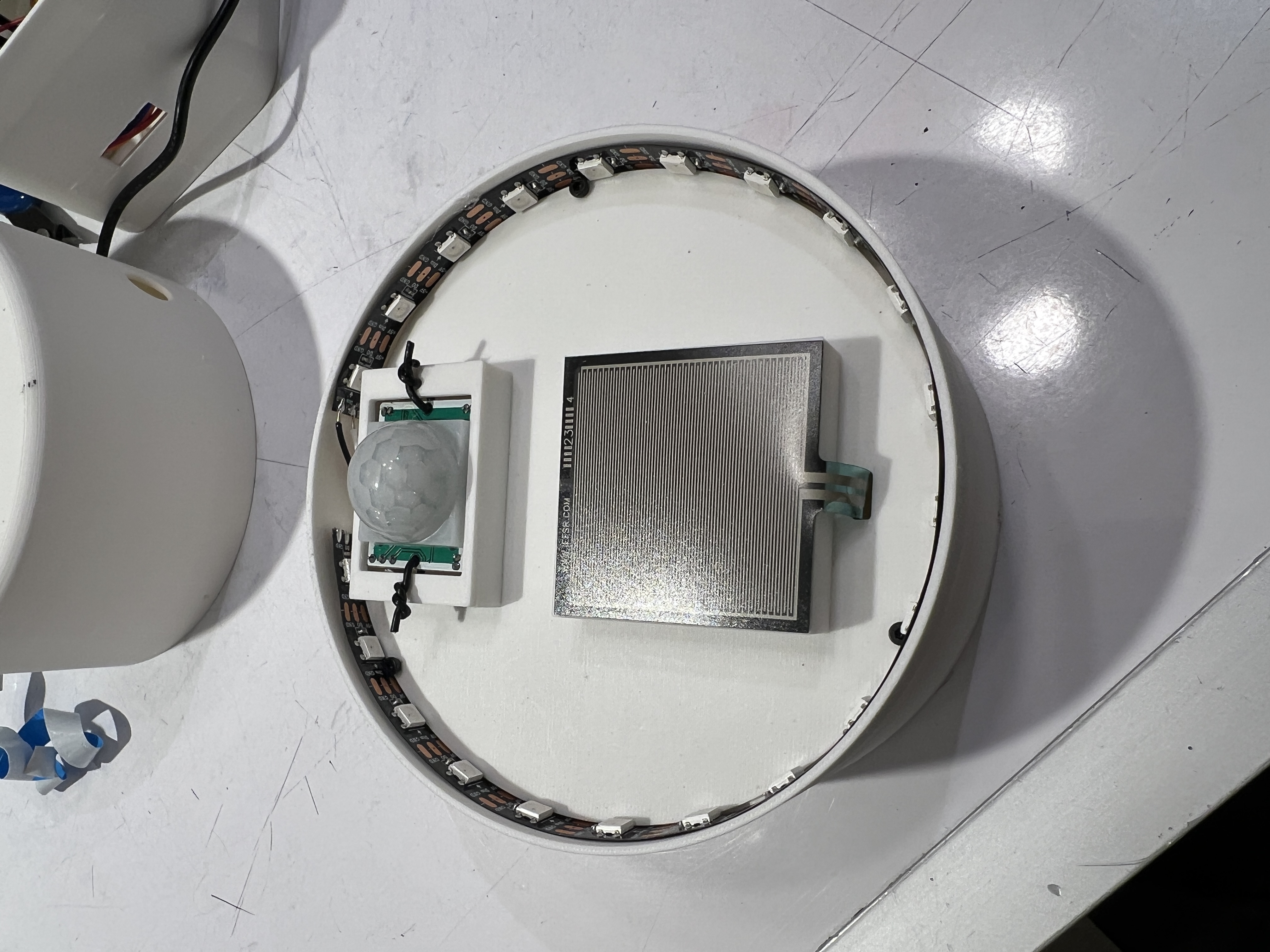
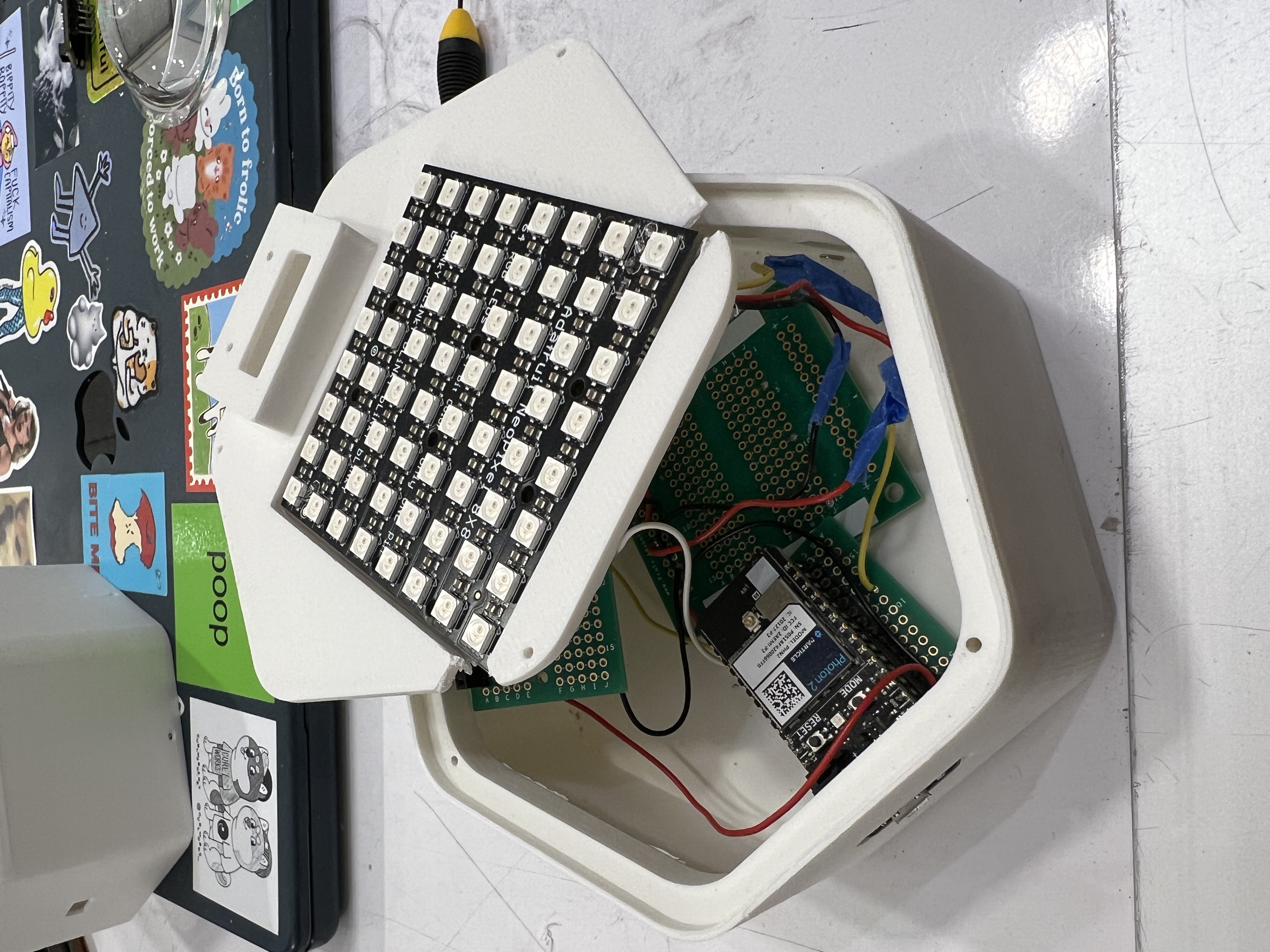
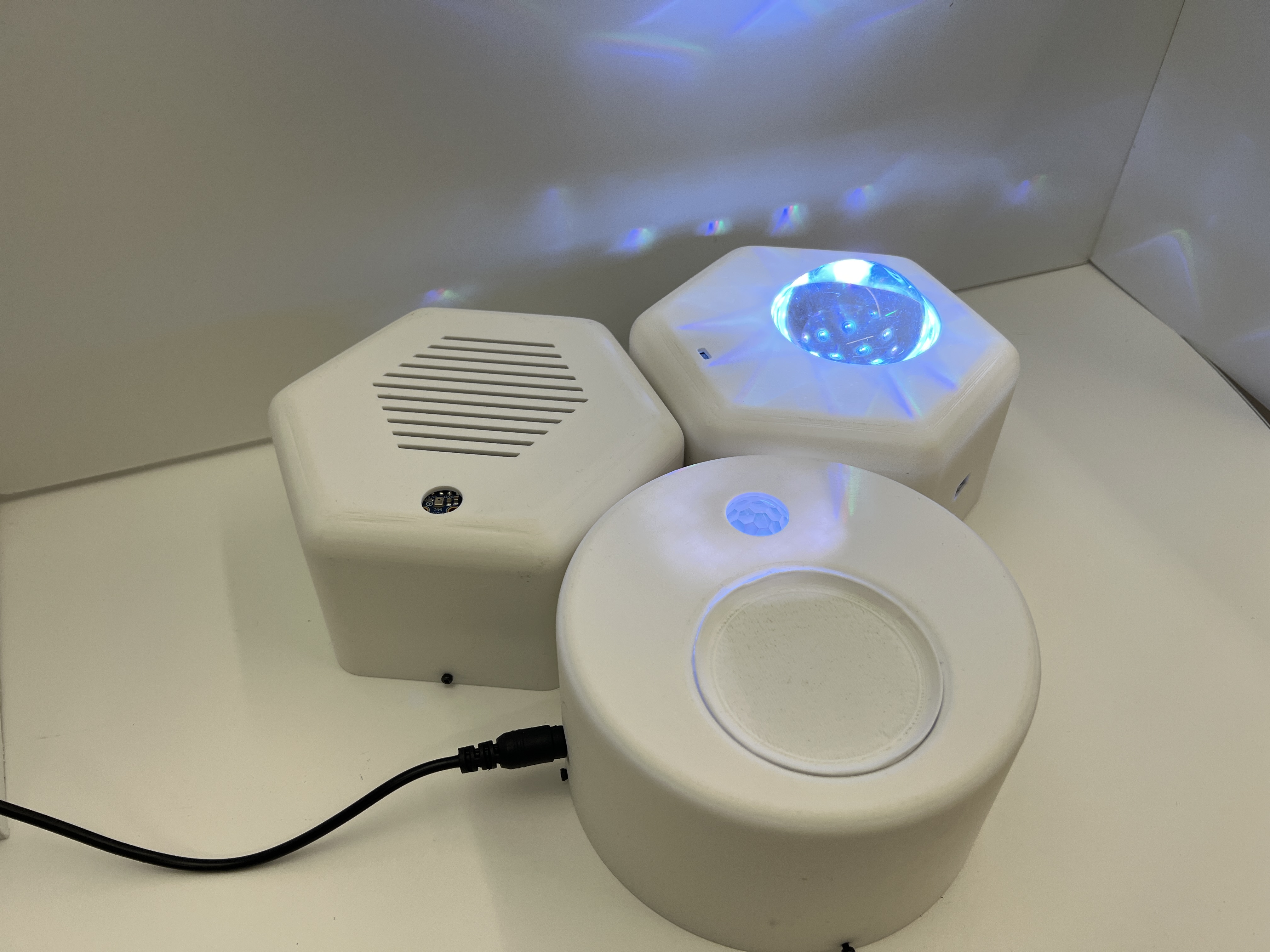
Each person uses a set of three devices: one main controller for sending positive and negative emotions, and two passive responder devices for ambient output. When an emotion is sent, both users’ spaces activate simultaneously through coordinated light and sound, creating a shared emotional experience across distance.
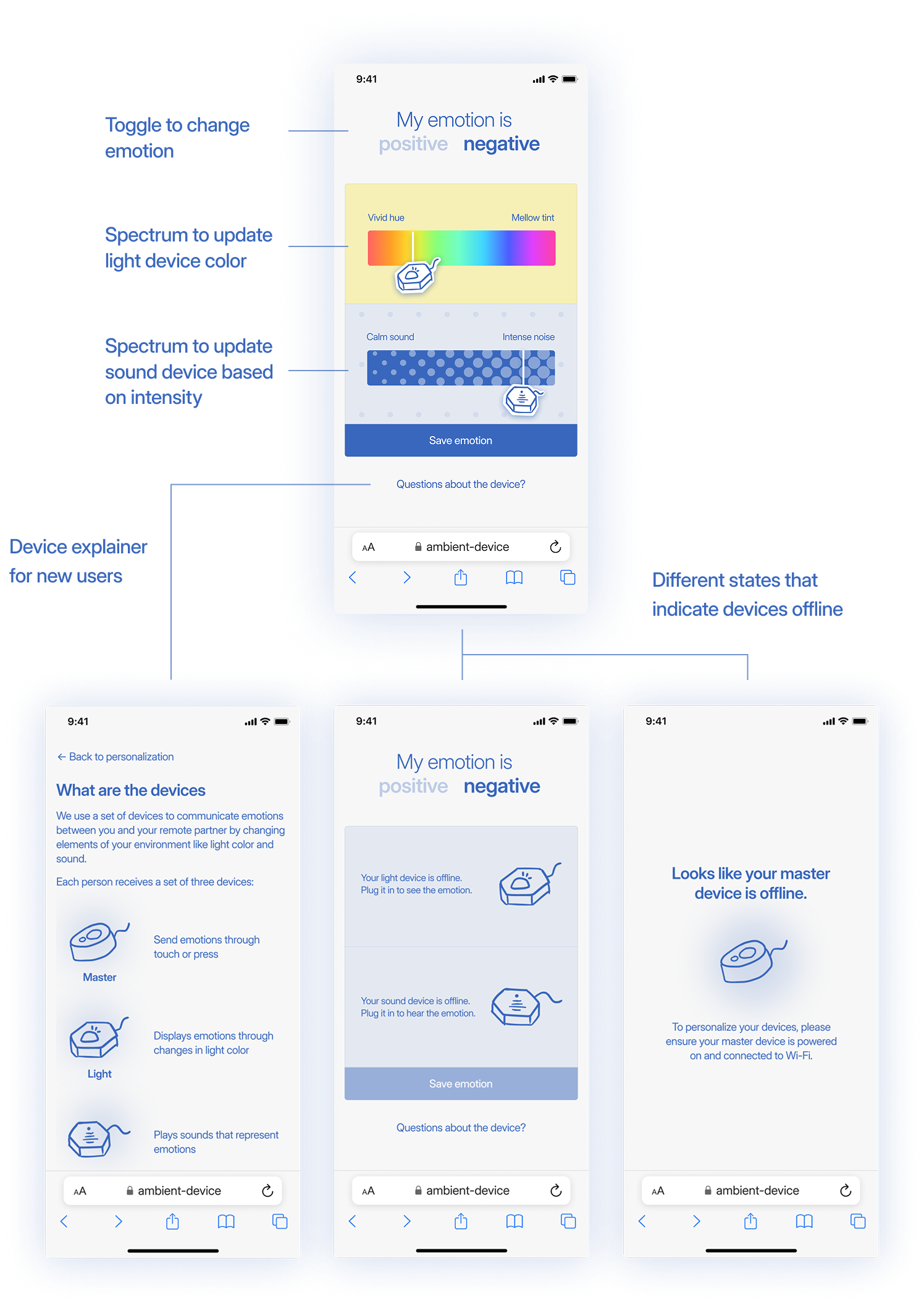
Emotion personalization interface
A companion web interface allows users to personalize emotional mappings enabling devices to react instantly during setup. The interface also explains the purpose and behavior of the system, helping users understand how FeltSpace works. In addition, it provides device status feedback, including offline and connection states, so users can quickly identify when a device is not functioning properly.
prototyping process
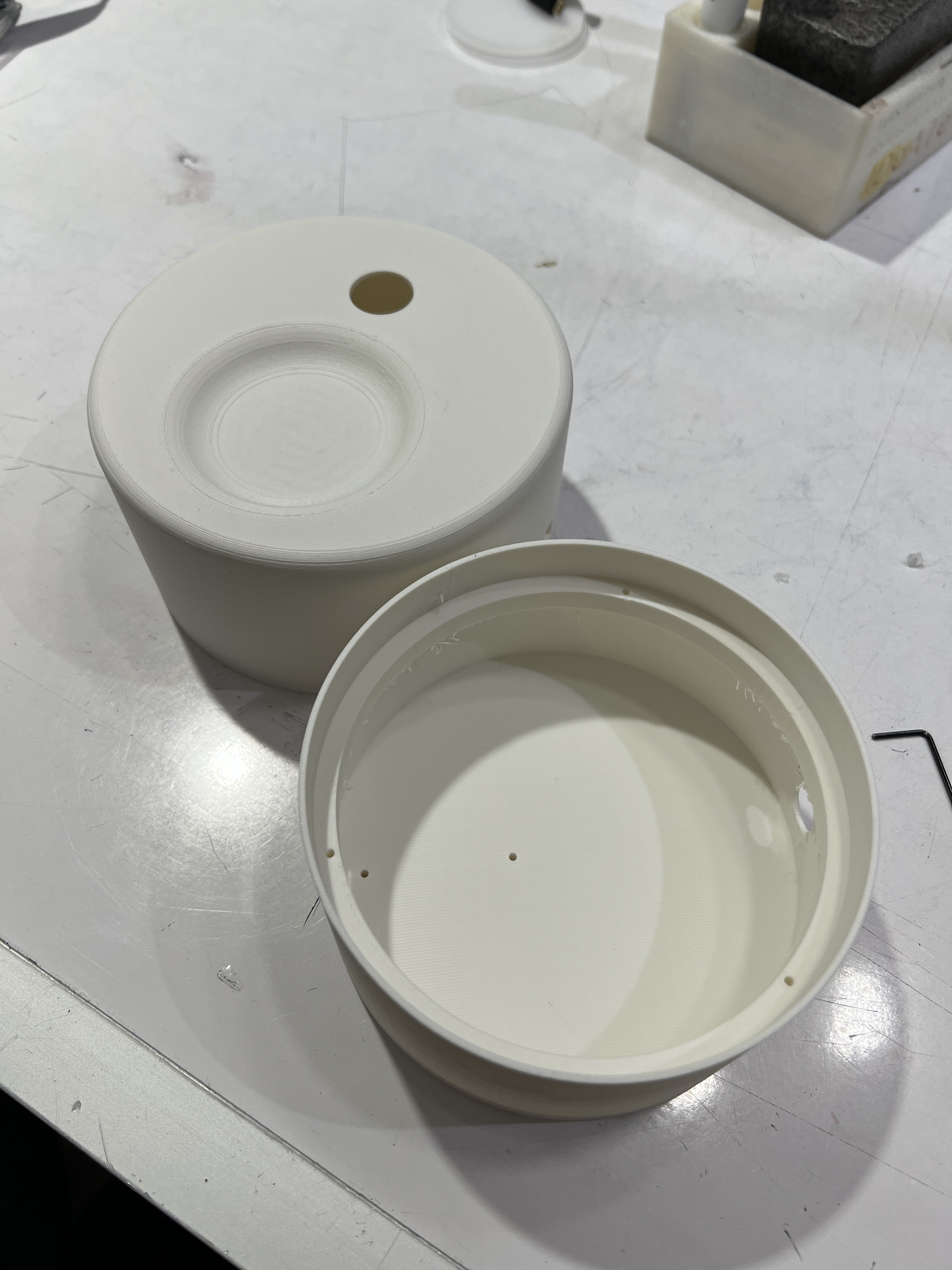
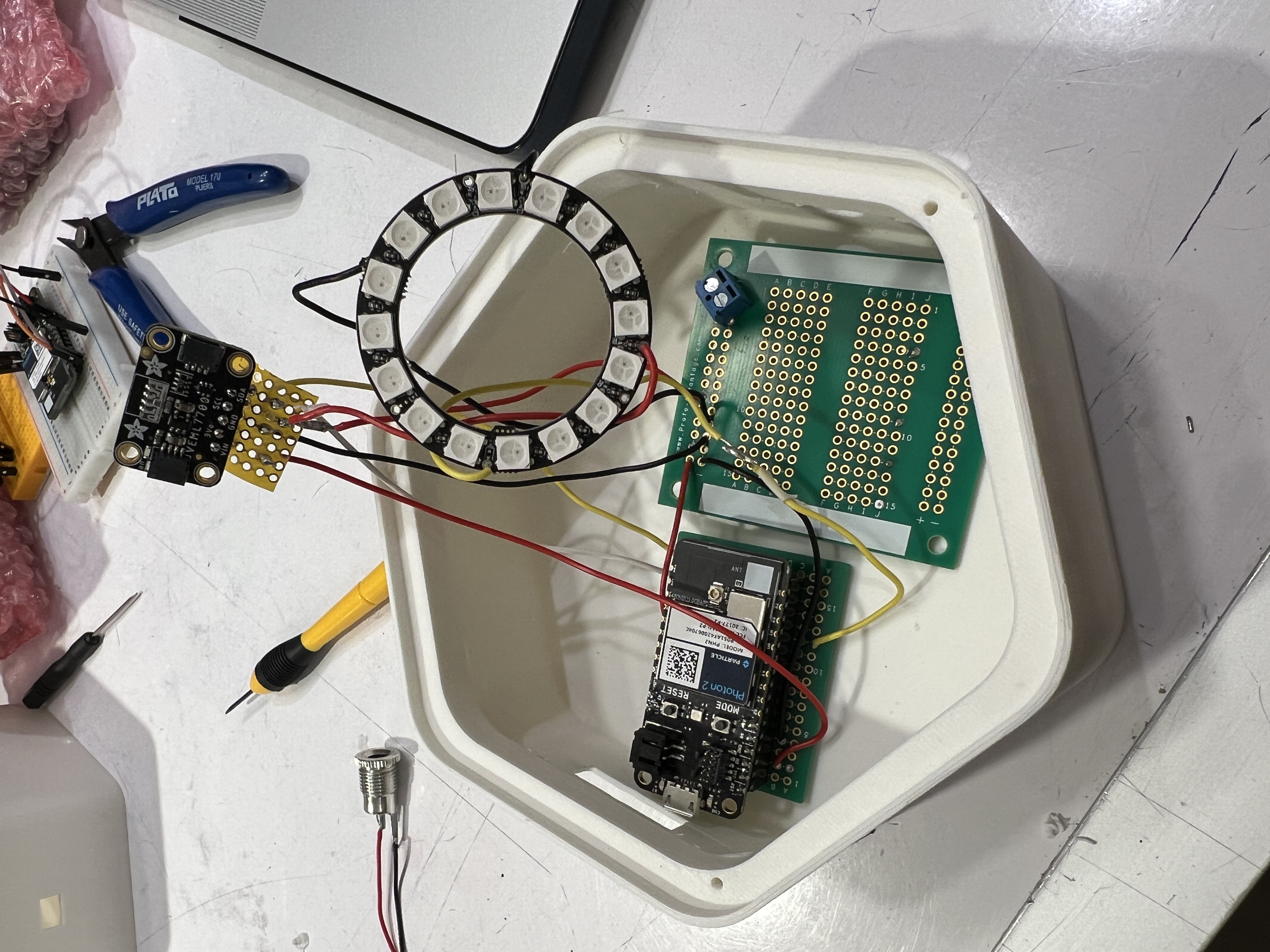
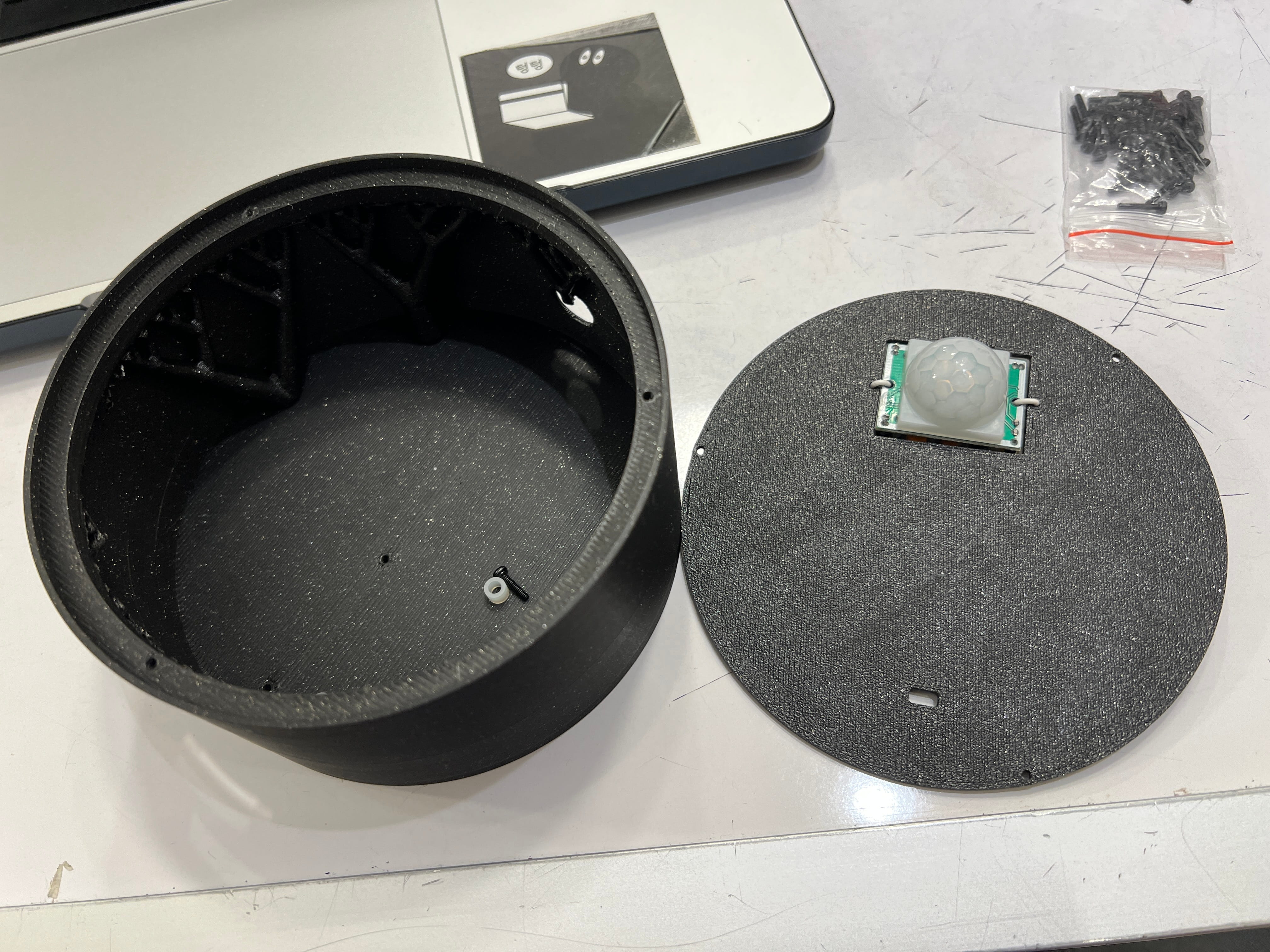
3D-printed device enclosure and hardware assembly
User testing
Lab testing and home deployment
The devices were evaluated in both controlled laboratory settings and private homes. The lab study focused on testing device stability, perceptibility, and system behavior under controlled conditions, while the in-home deployment examined how the devices influenced everyday behavior, emotional awareness, and communication over time.